

Community Programming
At the heart of our nonprofit’s mission is the belief that justice, freedom, and equity are essential pillars for a thriving community. Each year, we design and host a variety of programs, from book discussions and movie nights to speaker series and small group gatherings that encourage reflection and dialogue on these values. Our goal is to create inclusive spaces where community members of all ages can come together to learn, engage, and work toward a more just and equitable society.

2026 Community Read
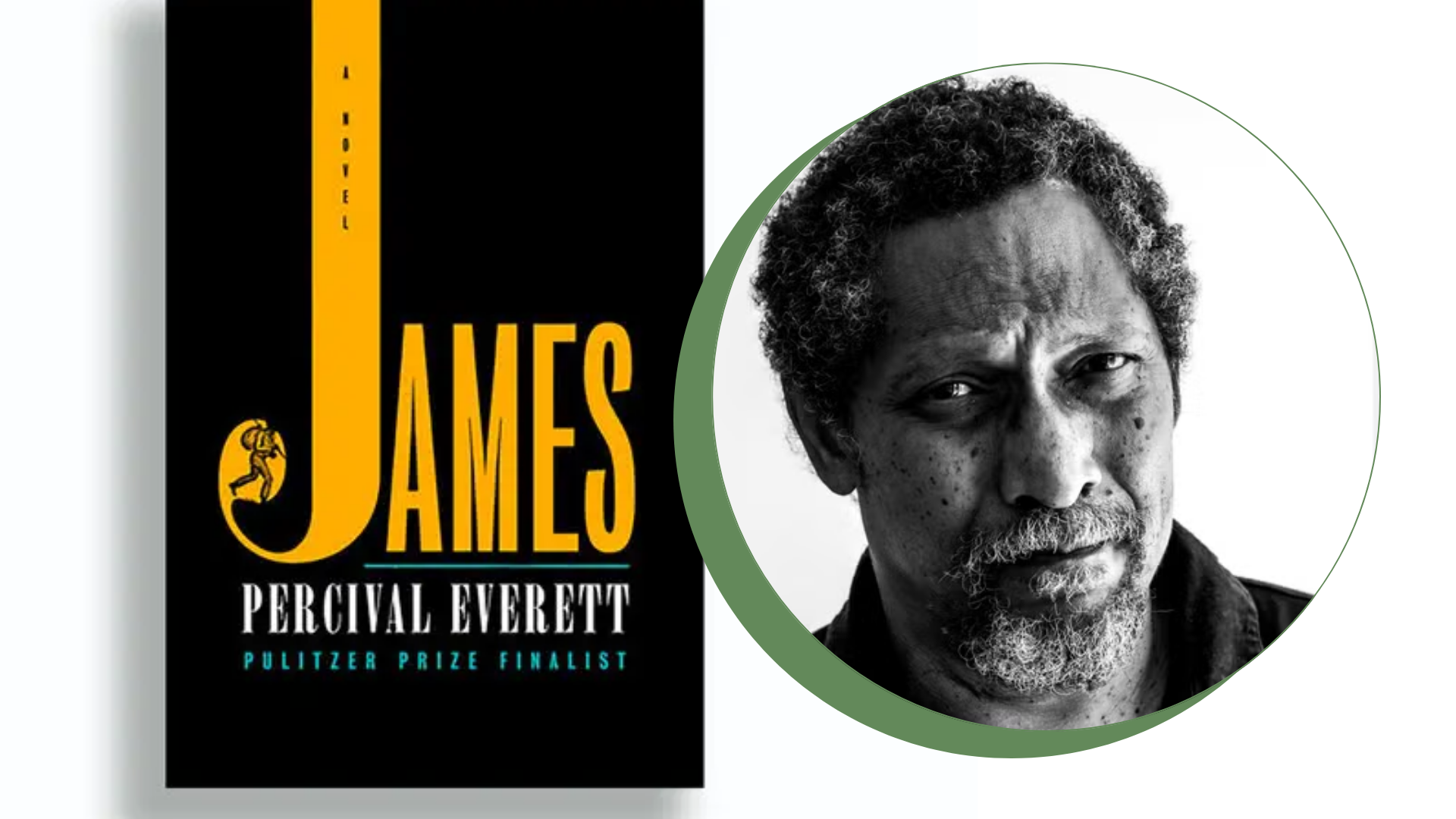
Each year, the Southern Cayuga Community Read brings neighbors and friends together to discuss a book that has local relevance while exploring timeless themes related to justice, freedom, and equity. This year, we read James, by Percival Everett.
Thank you to all those who participated! See Board Member, Elaine Meyers’ recap of the read on The Citizen, or in full below.
-
Southern Cayuga Conversations By Elaine Meyers
Reading Builds Understanding of Black History
In all good conversations, knowledge comes with non-judgemental careful listening. This is critical when listening to someone who has a very different experience and wants you to understand their truth. Listening is not only done with our ears, but with our eyes. Reading the words of someone new is a radical and very personal way to build understanding. Frequently our most revealing conversations occur with someone whose life and times are so different from our own that we would never have met without the presence of a book.
Every year, the Southern Cayuga Anne Frank Tree Project brings neighbors and friends together to discuss a book that explores timeless themes related to justice, freedom, and equity. Our book discussions are known as The Community Read and this year, we also celebrate Black History Month in our February gatherings as we read JAMES by Percival Everett.
My conversation with James, the central character in Everett’s novel JAMES began in 2025 when the Southern Cayuga Anne Frank Tree board began planning for our 2026 Community Read. Published in 2024, the book was the winner of the National Book Award and one of New York Times 10 Best Books of 2024. I read JAMES three times before our first Community Read discussion.
The first time I read JAMES, I entered the mind of James who is based on Jim in Mark Twain’s novel Huckleberry Finn. When I listened to James’ words, I discovered his need to hide his ability to read and write and how his use of two dialects enhanced his power over those who enslaved him. I have not read many books that allowed me to enter the mind and soul of a character in a book as deeply as Everett allowed me to be with James. I also related to the necessity of writing down a story that must be told as James acquired paper and pencil to record his words.
After my second reading of the book, I had the opportunity to hear Percival Everett speak in Syracuse, at the Friends of the Central Library Author Series on October 20, 2025. Everett discussed his understanding and appreciation of Twain’s humor. He agreed that ironic humor was at the center of his writing as well. During this talk Everette referred to his research for the novel and referred to work done in 1936-38 by the Federal Writers’ Project. I was so intrigued by his discussion that I went home and found SLAVE NARRATIVES: A Folk History of Slavery in the United States from Interviews with Former Slaves. https://www.loc.gov/collections/slave-narratives-from-the-federal-writers-project-1936-to-1938/about-this-collection/. I can’t remember the last time a writer inspired me to explore their research. Additional research included facts about Twain’s Huckleberry Finn that Everette said he read 15 times before he began to write. I discovered that it was first published in1884 and was one of the first in major literature to be written throughout in vernacular English and according to the American Library Association was the fifth-most challenged book in the US during the 1990s.
My third reading of JAMES enabled me to understand the complexity of being a parent and the choices of how to best protect an enslaved child depending on skin color and a family’s path to safety as the country enters the Civil War. This reading also revealed the irony of white philosophers Locke, Voltaire and Rousseau that James met in the books owned by Judge Thatcher. James learned that philosophers can write “all men are created equal” and adjust their arguments to abandon this ideal. Similarly, the white owners of the Virginia Minstrels who alleged their opposition to slavery expressed little willingness to change the limitations and power slavery gave them over those they allegedly supported.
As our community discussed the book in small sessions, the extremely cold weather lessened the number of those able to attend our meetings. I wanted everyone to be able to know James’ story and learn his truth from reading both the book and meeting the author Percival Everett. More research led to an interview with Everett done in October of 2024 with UC Santa Barbara staff Stephanie Batiste https://news.ucsb.edu/2024/021653/james-author-percival-everett-discusses-reimagining-huckleberry-finn-and-black. In this interview Everett affirms the power of the reader when Batiste asks him the most important thing for people to know about his work, and he replies that any meaning found in the book is generated by the reader. I discovered that PBS had a video readers club and in October 2024, their book club invited Percival Everette to discuss his book. I encourage you to read JAMES and attend this virtual readers gathering with the author at https://www.pbs.org/video/readers-club-percival-everett-hppjfc/.
Knowing James has brought me a very personally rewarding experience. As our community reads together, we grow stronger with new understandings that motivate research, enhanced listening skills and shared respect.
Community Read and Community Movie Night
Each year, the Southern Cayuga Community Read brings neighbors and friends together to discuss a book that has local relevance while exploring timeless themes related to justice, freedom, and equity. Our Annual Movie Night furthers this mission, screening films that reflect these core values.
See our past selections below:
-
2026 James, by Percival Everett
2025 Man’s Search for Meaning, by Viktor Frankl
2024 My Friend Anne Frank, by Hannah Pick-Goslar
2023 His Truth Is Marching On: John Lewis and the Power of Hope, by Jon Meacham
2021 “All the Real Indians Died Off”: And 20 Other Myths About Native Americans, by Roxanne Dunbar-Ortiz & Dina Gilio-Whitaker
2020 The Hate U Give, by Angie Thomas
Why are all the Black Kids Sitting Together in the Cafeteria?, by Dr. Beverly Tatum2019 Hidden in France: A Boy’s Journey under the Nazi Occupation in France, by Simon Jeruchim
2018 Return to Sender, by Julia Alvarez
2017Life in a Jar: The Irena Sendler Project, by Jack Mayer
2016 A Long Walk to Water, by Linda Sue Park
2015 A Mighty Long Walk: My Journey to Justice at Little Rock Central High School, by Carlotta Walls Lanier
2014 In My Hands: Memories of a Holocaust Rescuer, by Irene Opdyke
2013 The Diary of a Young Girl, by Anne Frank
-
American’s Who Tell the Truth Documentary
The Book Thief
Hidden Figures
A Long Walk Home
Traveling Truth Teller Poster Exhibit
The Anne Frank Tree Project proudly owns 20 portraits from Robert Shetterly’s inspiring series, “Americans Who Tell the Truth.” We collaborate with local organizations to display these powerful works, fostering community dialogue around truth, justice, and civic engagement.
Please contact us at scfranktree@gmail.com if you’re interested in hosting an exhibit.

Interested in partnering?
Contact us at scfranktree@gmail.com